
Agentic AI in 2025: What Actually Worked This Year vs. The Hype

If you’ve spent any time on the "build agents train" this year, you’ve probably tried everything—from customer support bots to massive data processors. But if we are being brutally honest, looking back at Agentic AI in 2025 reveals a massive gap between LinkedIn hype and enterprise reality.
It turns out that most agent use cases are complete hype. But the ones that actually work? They are genuinely transformative.
Using the Feynman Technique—distilling complex realities into their simplest, jargon-free truths—we are going to break down exactly what flopped, what succeeded, and the new 2025 playbook for building agents that actually matter.
Level 1: The Trap of the "Do-Everything" Robot (What Flopped)
Think of a generic, "do-everything" AI Assistant like a Swiss Army Knife. It has a tiny saw, a tiny corkscrew, and a tiny blade. It can technically do a little bit of everything, but it sucks at all of it.
This year, businesses wasted months building highly complex workflows promising to "revolutionize" everything. The results?
- Constant Babysitting: Agents required so much monitoring that it was more work than just doing the task manually.
- Fragile Complexity: Massive multi-node workflows that broke if you looked at them wrong.
- The Judgment Trap: Anything requiring "judgment calls" (like strategic decisions or complex empathy) without crystal clear rules failed immediately.
Marketing promised us fully autonomous sales reps and AI capable of replacing entire departments. The reality? Humans spending hours debugging interconnected API endpoints just to get a hallucinated output.
Level 2: What Actually Worked (The "One Job" Rule)
If the Swiss Army knife failed, what succeeded? The single-tool sledgehammer.
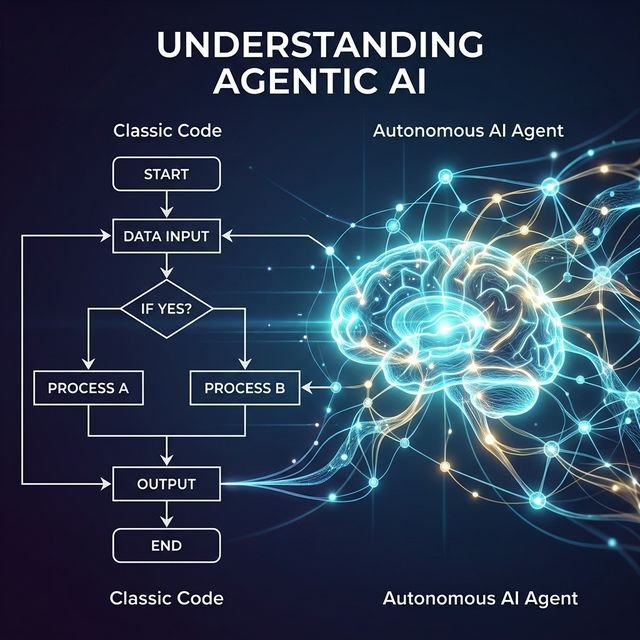
The absolute most successful framework for Agentic AI in 2025 is devastatingly simple: If you can't explain the agent's task in one sentence, it's too complicated.
An effective agent has three things: One task, clear inputs and outputs, and hooks strictly into systems you already use (like Slack, HubSpot, and Linear).
The Infographic: The 2025 Agent Playbook
- [❌ FICTION] Full Autonomy: "Agent handles the entire customer lifecycle from lead nurturing to closing."
- [✅ FACT] Augmented Workflows: "Agent triggers off an incoming ticket, safely classifies the intent via an LLM, and routes it to the correct human Slack channel."
- [❌ FICTION] Standalone Dashboards: "Force users to log into a new, complex AI product environment."
- [✅ FACT] Invisible Integrations: "The agent lives invisibly, leveraging official MCP (Model Context Protocol) servers to ping APIs in the background."
Level 3: Three Proven Examples That Did Not Flop
Let’s look at three highly scoped, specialized agents that are currently saving teams hundreds of hours without breaking.
1. The Support Ticket Router
The Problem: Tickets sit in a general queue for hours.
The Agent: Reads incoming support tickets, uses an LLM to categorize the intent (billing, technical, account recovery), and dumps a summary into the correct Slack channel.
The Result: Response times dropped from 4 hours to 45 minutes.
2. The Meeting Note Action-Taker
The Problem: Meetings happen, but action items disappear into Slack threads.
The Agent: Grabs the transcript immediately after the meeting, extracts concrete action items, creates corresponding tasks in Linear, and pings the assigned person.
The Result: Things actually get done. Invisible integration at its finest.
3. The Weekly Renewal Risk Predictor
The Problem: Account managers don't know which clients are about to churn until it's too late.
The Agent: Wakes up every Monday, pulls HubSpot data, correlates usage patterns with recent support ticket sentiment, scores churn risk, and emails a targeted list to account managers.
The Result: Saves high-risk accounts before they spiral. Highly predictable inputs and outputs.
Conclusion: Speed and Human-Centered AI
The era of building sci-fi AI overlords is over. The current win in Agentic AI is taking the repetitive garbage off a human’s plate so they can do actual, strategic work.
If it takes you weeks to build an agent, you will never iterate on it. Today's best systems (often using MCP servers and low-code agent builders like Vellum, LangFlow, or n8n) can go from idea to deployment in under an hour.
Stop chasing full automation and focus on where AI genuinely helps your team work better. Join our Agentic AI Developer Bootcamp to learn the art of scoped, high-ROI agent design.
Suggested reading



Frequently Asked Questions
Are fully autonomous sales agents realistic in 2025?
No. Despite the hype, agents that require unstructured, strategic decision-making or creative judgment without clear rules generally end up being more work to maintain than doing the task manually.
What is the most successful framework for Agentic AI?
The most successful framework in 2025 is "One task, clear inputs and outputs, hooked into tools you already use." Forget the "do-everything" assistant and focus on single, highly-scoped repetitive tasks.
Will AI Agents replace human jobs?
Currently, the real win for Agentic AI is in Human-Centered AI (HCAI)—augmenting humans, not replacing them. Agents handle the repetitive "garbage" tasks so people can focus on actual strategic work.
Live masterclasses
Enroll in our live masterclasses programs: Build real AI agents or your first data-science model with expert mentors.
Agentic AI Developer Bootcamp
Structured agentic AI and LangGraph training — intensive bootcamp-style projects with mentor support.
Duration: 2 days, 5 hours each day.
Explore Agentic AI Course →Data Science Masterclass
Start your data science journey with a structured live masterclass and hands-on model building.
Duration: 2 days, 5 hours each day.
Data Science Masterclass →